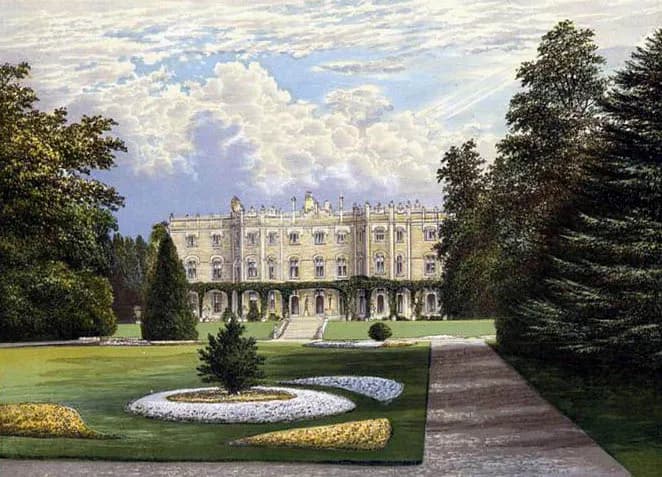
Sitting on a hilltop two miles west of High Wycombe, Hughenden Manor commands sweeping views across the Chilterns. This Grade I listed building, once the beloved country retreat of Victorian Prime Minister Benjamin Disraeli, concealed a remarkable secret that remained hidden for sixty years: during the Second World War, its basement served as a covert intelligence base codenamed "Hillside".
Disraeli's Country Sanctuary
The Disraeli family's connection to Hughenden began in 1847 when Isaac D'Israeli purchased the estate for £25,000. Upon his father's death the following year, Benjamin Disraeli took ownership and transformed the Georgian house into his sanctuary away from Westminster politics.
In 1862, Disraeli and his wife Mary Anne commissioned architect Edward Buckton Lamb to remodel the manor in the Jacobethan style. The couple spent much of their married life here until Mary Anne's death in 1872. When Disraeli himself died in April 1881, he was buried alongside his wife in a vault at St Michael and All Angels Church on the estate. Queen Victoria later erected a memorial to Disraeli in the church; it remains the only instance of a reigning British monarch erecting a memorial to a subject.
The Hillside Secret
The true significance of Hughenden during the Second World War remained classified until National Trust researchers uncovered evidence in 2005 whilst preparing for the sixtieth anniversary of VE Day. The manor's basement had housed a top-secret intelligence operation staffed by approximately one hundred Air Ministry personnel.
The primary function of "Hillside" was the analysis of aerial photographs of Germany and the creation of detailed maps for bombing missions. Staff worked in conditions of strict secrecy, knowing that their location near High Wycombe placed them on Hitler's list of priority targets. The intelligence gathered and processed at Hughenden supported some of the most famous operations of the war.
Mapping the Dambusters Raid
The most celebrated contribution of the Hillside operation was its role in planning Operation Chastise, the May 1943 attack on German dams immortalised as the "Dambusters" raid. Intelligence staff at Hughenden prepared the detailed maps that enabled RAF bombers to locate and strike the Möhne and Eder dams with Barnes Wallis's bouncing bombs.
A special order issued after VE Day specifically congratulated Hillside staff for their contribution to the success of both the Dambusters operation and the airborne landings on D-Day. The same team also developed plans for an attack on Hitler's bunker at Berchtesgaden, known as the Eagle's Nest.
From Secret Base to National Trust
Following the war, the Abbey family and the Disraelian Society transferred Hughenden Manor to the National Trust in 1947. The property was designated a Grade I listed building in 1955. Today, the manor is preserved as it might have appeared during Disraeli's occupation, offering visitors a glimpse into Victorian political life.
An exhibition documenting the manor's wartime history opened in April 2005, finally revealing the secrets of Operation Hillside to the public. Visitors can now explore both the Disraeli rooms and the basement spaces where intelligence officers once pored over aerial photographs that shaped the outcome of the war.
High Wycombe's Hidden History
For residents of High Wycombe, Hughenden Manor represents a unique piece of local heritage with national and international significance. The manor's transformation from a Victorian Prime Minister's retreat to a critical wartime intelligence hub illustrates the remarkable adaptability of Britain's country houses during the twentieth century.
The National Trust property remains open to the public throughout the year, with its south-facing terrace still offering the fine views of High Wycombe that Disraeli himself once enjoyed. The contrast between the peaceful Chiltern landscape and the intense wartime activity that once took place beneath the manor's floors makes Hughenden one of Buckinghamshire's most compelling historical sites.